What is the common European data space for cultural heritage? How does it relate to and complement the European Collaborative Cloud for cultural heritage (ECCCH) and how does the HERITALISE project support their integration? Discover more in this post from the Europeana Foundation, a HERITALISE project partner.
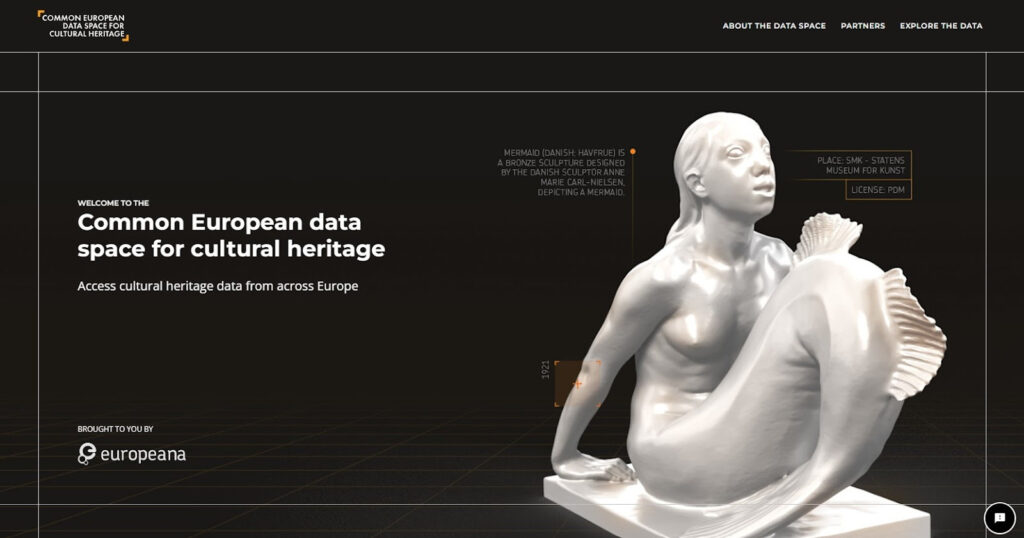
Screenshot of the common European data space for cultural heritage website, Europeana Foundation, 2026, CC-BY-SA
What is the common European data space for cultural heritage?
The common European data space for cultural heritage is the flagship initiative of the European Commission to accelerate the digital transformation of Europe’s cultural sector and foster the creation and reuse of digital cultural heritage content. Funded under the European Union’s Digital Europe programme, the data space enables the sharing and reuse of cultural heritage data across Europe. It deploys the cutting-edge technical infrastructure that makes this possible, alongside a suite of tools, standards and frameworks supported by a vibrant and collaborative community.
Why does the data space matter?
The common European data space for cultural heritage is one of 14 data spaces being developed by the European Commission to support the growth of the digital economy in strategic economic sectors and domains of public interest. Its purpose and value are captured in a description from the recently published Common European data space for cultural heritage Strategy 2025-2030:
‘The common European data space for cultural heritage opens up access to digitised cultural heritage, enables wider data sharing and reuse by economic actors, innovators, creatives, researchers and citizens alike, creating economic value and, at the same time, promotes recognition and appreciation of our cultural heritage and the understanding of instances of history and values we share as Europeans, no matter where we trace our roots to and live.’
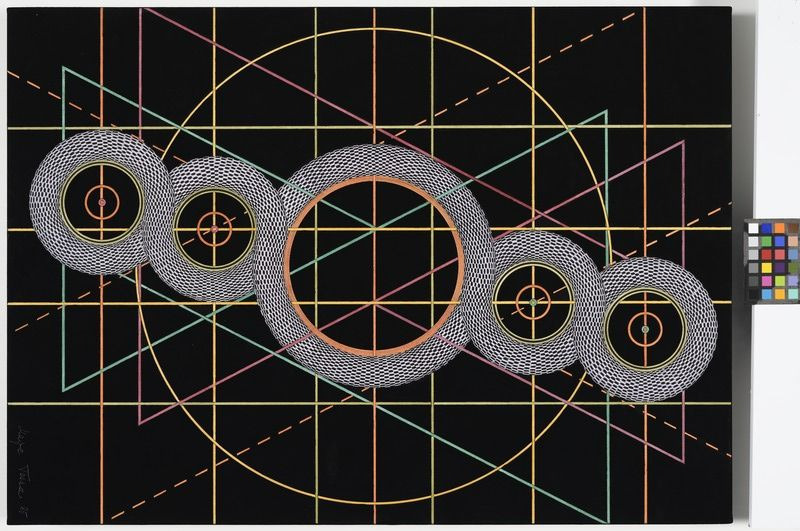
Ühendus II by Taska, Marje (autor) – 1985 – Art Museum of Estonia, Estonia – CC0.
Who is leading it?
At the heart of the data space is the Europeana Initiative, which for more than 15 years has worked to empower the cultural heritage sector in its digital transformation. The Europeana Initiative is made up of three interlinked bodies: the Europeana Foundation, an independent, non-profit organisation with a team of approximately 60 staff members, working to put cultural heritage to good use in the world; the Europeana Network Association, a diverse and democratic community of over 5,700 individual experts working in the field of digital cultural heritage and related disciplines; and the Europeana Aggregators’ Forum – a network of organisations who work with cultural heritage institutions to gather authentic, trustworthy and robust data and make it accessible through the data space.
The Europeana Initiative works closely with the data space consortium, 18 specialist organisations from nine EU countries who work together to deploy the data space, and with the crucial support of EU Member States, who oversee the data space. The Initiative also collaborates with projects in the European digital cultural heritage field including the European Collaborative Cloud for cultural heritage and HERITALISE.
When is it happening/when has it happened?
Deployment of the data space began in 2022, building on the achievements of the Europeana Initiative. Since then, the data space has been built into a space for interoperability, innovation and inspiration. Its cutting-edge infrastructure, high-quality data offer, enriching capacity building resources and engaging digital services provide exciting opportunities for the contribution and reuse of digital cultural heritage data by Europe’s professionals, citizens and institutions. The data space has seen advances in data quality and offer, the implementation of a sector-leading events and training programme, creative and engaging programmes which encourage the reuse of digital cultural heritage, and leading work around AI and 3D. Through Europeana.eu, the data space offers access to over 61,000,000 digitised cultural heritage items from more than 3,700 institutions.
The European Commission Recommendation of 2021 on a common European data space for cultural heritage invites EU Member States to digitise in 3D all monuments and sites deemed at risk, and half of the most physically visited by 2030. It also sets ambitious targets for 3D content contribution to Europeana.eu and the data space. To contribute to these targets, the European Commission and the Europeana Initiative launched the Twin it! 3D for Europe’s culture campaign in June 2023, in cooperation with the Swedish, Spanish and Belgian Presidencies of the Council of the EU. Twin it! invited EU Member States to submit at least one 3D-digitised heritage asset to the data space, resulting in an exceptional collection of 37 emblematic and high-quality assets. Twin it! also saw the publication of the Twin it! Call to Action, which sets out seven key priorities to advance the 2021 Recommendation, and the launch in 2025 of Twin it! Part II.
Find out more about the achievements of the data space over the last year in the common European data space for cultural heritage – annual report 2024 – 2025.
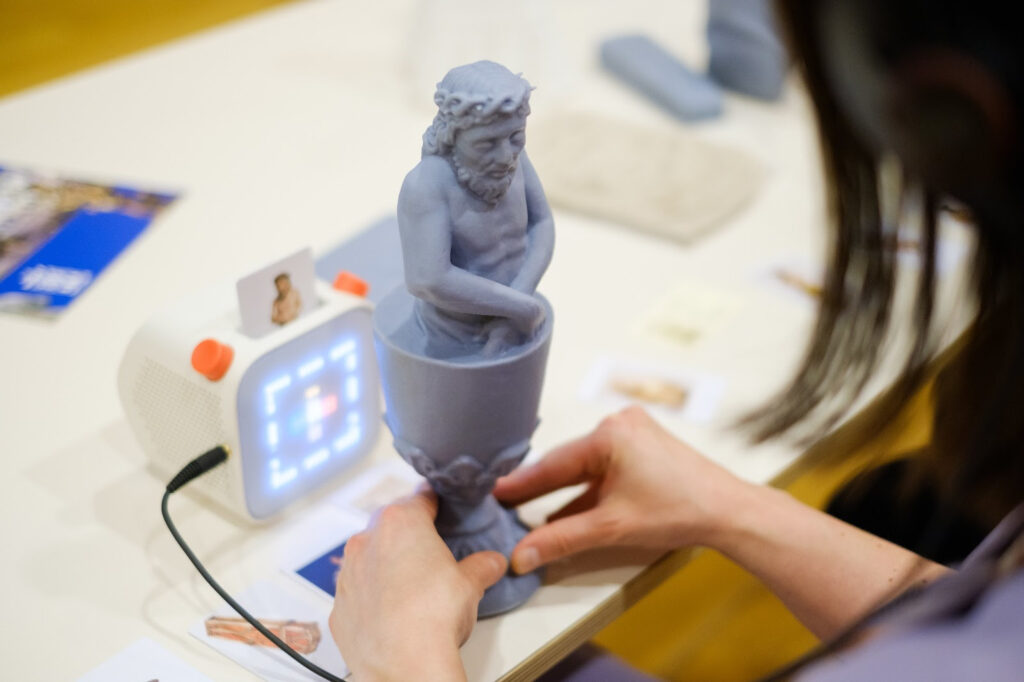
Twin it! Fair at the High-level event of the Twin it! 3D for Europe’s culture campaign, 14 May 2024, Sebastiaan ter Burg, Europeana Foundation, CC0
How will the data space collaborate with the ECCCH and HERITALISE?
The data space and the ECCCH are distinct yet complementary initiatives, and are already working closer together towards beneficial synergies for the sector.
The data space is Europe’s core public infrastructure, aimed at democratising access to heritage data and enabling its discovery and reuse across a wide range of professional and personal user scenarios. The Cloud complements this role by providing Europe’s collaborative digital working environment for research on cultural heritage, heritage science, conservation and innovation.
In a nutshell, the data space enables heritage institutions to make trusted, standardised data available and shareable at scale, while the ECCCH provides the environment in which this data – or newly generated data – can be enriched, analysed and transformed through research and innovation.
The Europeana Initiative is proud to be a partner in the European Cloud for Heritage OpEn Science (ECHOES) consortium, which establishes the infrastructure and legal entity for the ECCCH, and in the HERITALISE project, which is part of and integrates with the ECCCH. These collaborations help to ensure that the data space and ECCCH strengthen and support each other in areas from metadata enrichment, to capacity building, to driving innovation in areas such as 3D, to advancing policy goals. For example, the ECCCH can support policy objectives related to heritage at risk by enabling its documentation, virtual preservation, and creation of digital twins for future research and immersive interaction. By aligning around policy goals, the data space and the ECCCH together strengthen Europe’s capacity to digitally preserve and reuse cultural heritage at scale.
In the HERITALISE project specifically, the Europeana Initiative contributes expertise in data mapping, standards, interoperability and professional development, and works to ensure that the data produced by HERITALISE functions within the wider landscape and ECCCH.
HERITALISE’s work on advanced digitisation technology which supports cultural heritage institutions and researchers to produce rich 3D content can help to expand the 3D data available in the data space and support other efforts in this area (such as Twin it!). The project partners involved in the HERITALISE use cases will also produce 3D models themselves, which could find their way into the data space. At a more technical level, the project will hopefully provide insights into what’s needed in terms of metadata requirements (paradata) to properly support the inclusion of valuable 3D models in the data space.
Find out more
To find out more about the common European data space for cultural heritage, we invite you to visit the website, and explore the data offer through Europeana.eu.
If you work in and around (digital) cultural heritage, we also invite you to join the Europeana Network Association, for the latest news, events, opportunities and updates from across the sector.
 ECHOES is a project funded by the European Commission under Grant Agreement n.101158081. The views and opinions expressed in this website are the sole responsibility of the author and do not necessarily reflect the views of the European Commission.