
Research projects generate valuable knowledge, but their long-term impact depends on how successfully that knowledge is transferred into practice. One of the most effective ways to achieve this is through standardisation, which helps establish common methodologies, improve interoperability, and build confidence in the adoption of new technologies across Europe. Recognising this from the very beginning, the HERITALISE project identified standardisation as a strategic activity to ensure that its research results could contribute well beyond the project’s lifetime. Rather than waiting until the final stages of the project, HERITALISE partners engaged early with national and European standardisation bodies, laying the foundations for future contributions to the cultural heritage sector.
Building the foundations through national standardisation
Early engagement with Spain’s cultural heritage committee
The first step took place in Spain, where, with the support of the Spanish Association for Standardisation (UNE), HERITALISE identified the national technical committee responsible for cultural heritage standardisation: CTN 41 SC8. After joining the committee in October 2025, project representatives began participating in its regular meetings, gaining first-hand insight into ongoing initiatives while contributing to discussions on future standards.
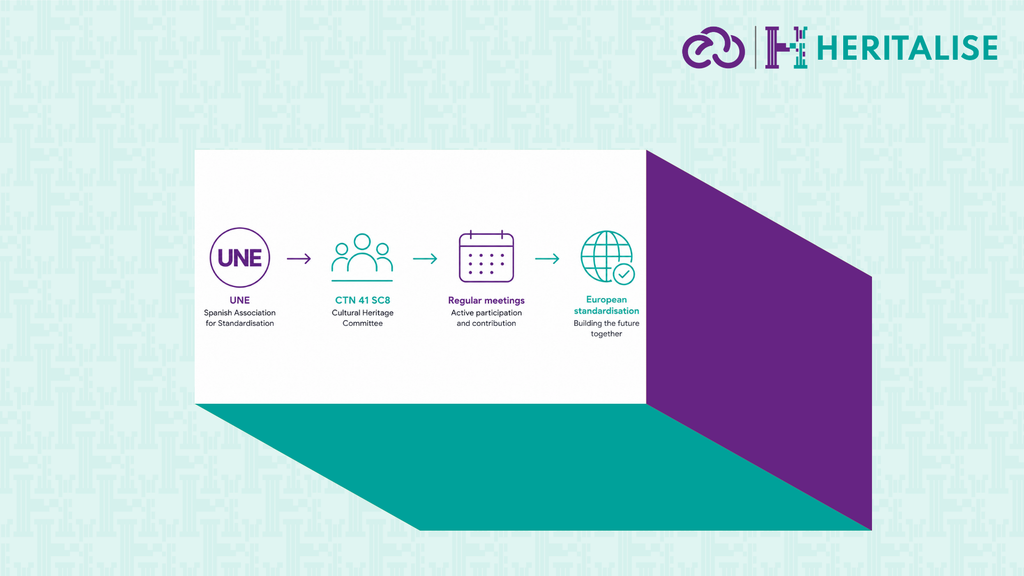
This early involvement enabled HERITALISE to anticipate future developments instead of reacting to them. By participating from the outset, the project established a long-term presence within the standardisation community and created opportunities to influence emerging topics relevant to digital cultural heritage.
Defining a strategic focus on photogrammetry
As discussions progressed within the project, partners explored which areas would benefit most from standardisation. Photogrammetry emerged as a clear priority because of its increasing importance for the digital documentation of archaeological sites, monuments and cultural heritage assets.
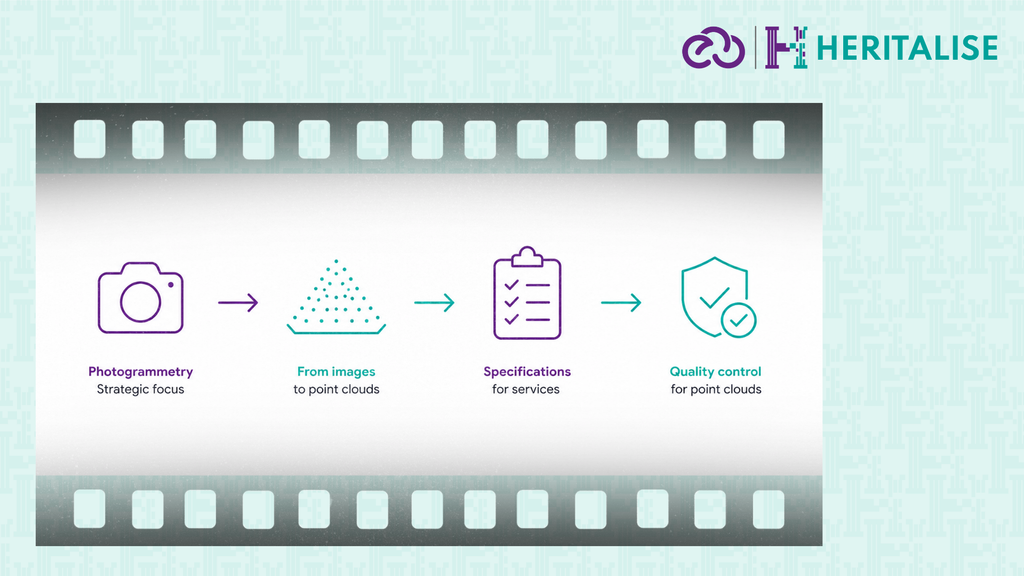
Two complementary directions were identified. The first focuses on developing specifications for photogrammetric services used in archaeological excavations and heritage documentation projects, helping institutions define clear and consistent requirements when commissioning this type of work. The second addresses quality control methodologies for point clouds generated through photogrammetric workflows, supporting greater reliability, accuracy and consistency in digital heritage documentation.
Expanding HERITALISE’s contribution at the European level
Joining CEN/TC 346/WG 11
Building on its national engagement, HERITALISE expanded its participation to the European level by joining CEN/TC 346/WG 11, the working group responsible for developing standards related to the conservation of cultural heritage. This represents an important milestone for the project. The group has recently launched work on a new standard dedicated to Historic Building Information Modelling (HBIM), an area that is becoming increasingly relevant for documenting, managing and preserving historic buildings. Through its participation, HERITALISE can contribute technical expertise and practical experience to discussions that will shape future European approaches to HBIM.
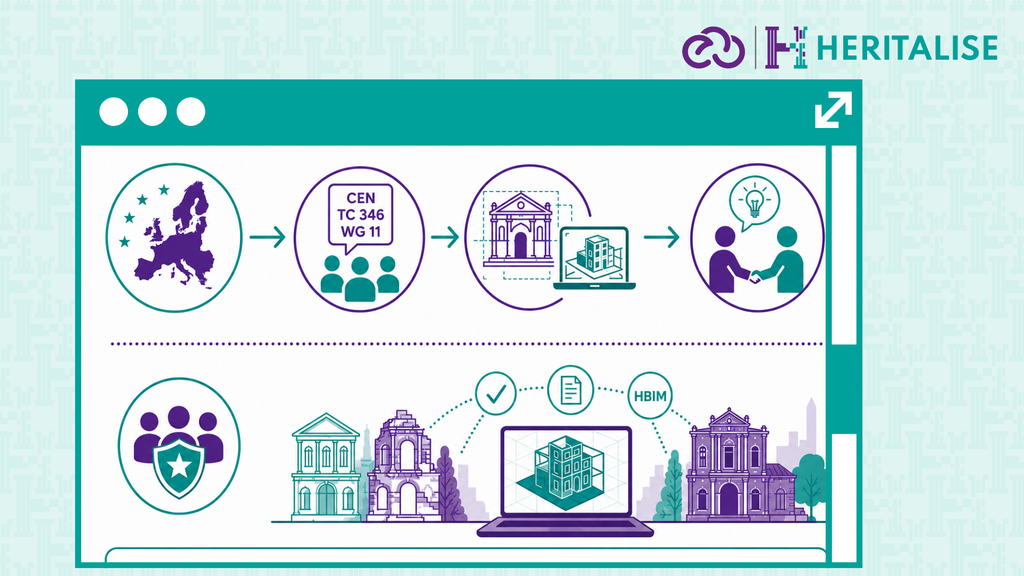
Although this type of work often takes place behind the scenes and individual contributors are not publicly recognised, it plays a crucial role in ensuring that research knowledge is reflected in future European standards.
Proposing a European CEN Workshop Agreement on photogrammetry
Alongside its contribution to formal European standards, HERITALISE is pursuing a second initiative with the potential for wider visibility. The project has proposed developing a CEN Workshop Agreement (CWA) dedicated to photogrammetry at the European level.
Unlike formal European Standards, a CWA is developed through an open and collaborative process involving stakeholders from across Europe. This makes it an effective mechanism for rapidly establishing consensus on emerging technologies, methodologies and best practices. If approved, the proposed CWA would provide practical guidance for the use of photogrammetry in cultural heritage while explicitly recognising HERITALISE’s contribution throughout its development. It would also strengthen collaboration between researchers, heritage professionals, technology providers and public authorities working to improve digital documentation practices.
Turning research into lasting impact
HERITALISE’s standardisation activities illustrate two complementary pathways for creating long-term impact. On one hand, the project is helping shape future European standards for HBIM through its active participation in CEN/TC 346/WG 11. On the other, it is promoting the development of a European CWA on photogrammetry that could provide practical guidance for the heritage community while increasing the visibility of the project’s achievements.
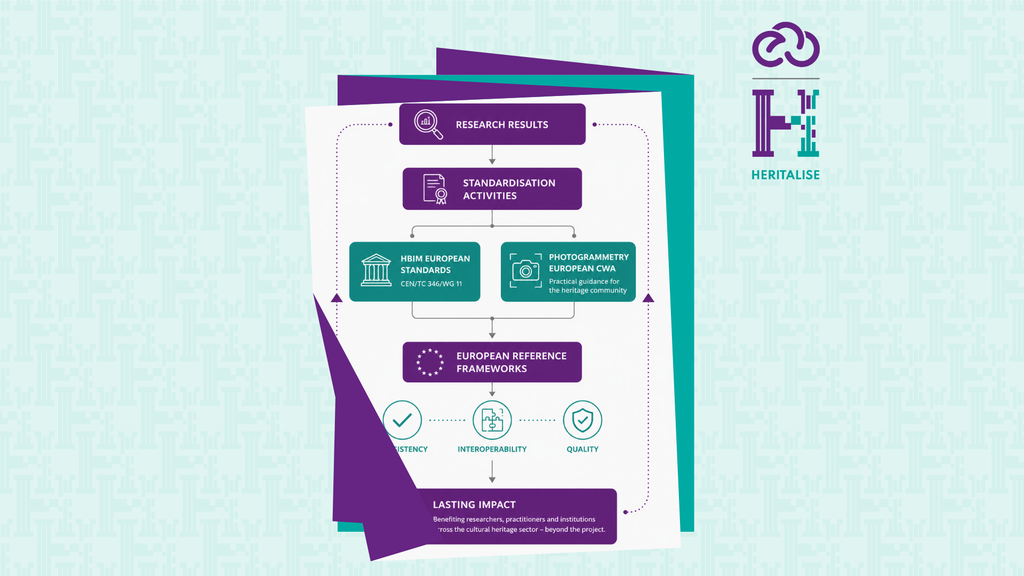
By engaging with standardisation bodies from the early stages of the project, HERITALISE is helping transform research results into shared European reference frameworks. This work supports greater consistency, interoperability and quality across the cultural heritage sector, ensuring that the project’s innovations continue to benefit researchers, practitioners and institutions long after the project has concluded.
 ECHOES is a project funded by the European Commission under Grant Agreement n.101158081. The views and opinions expressed in this website are the sole responsibility of the author and do not necessarily reflect the views of the European Commission.