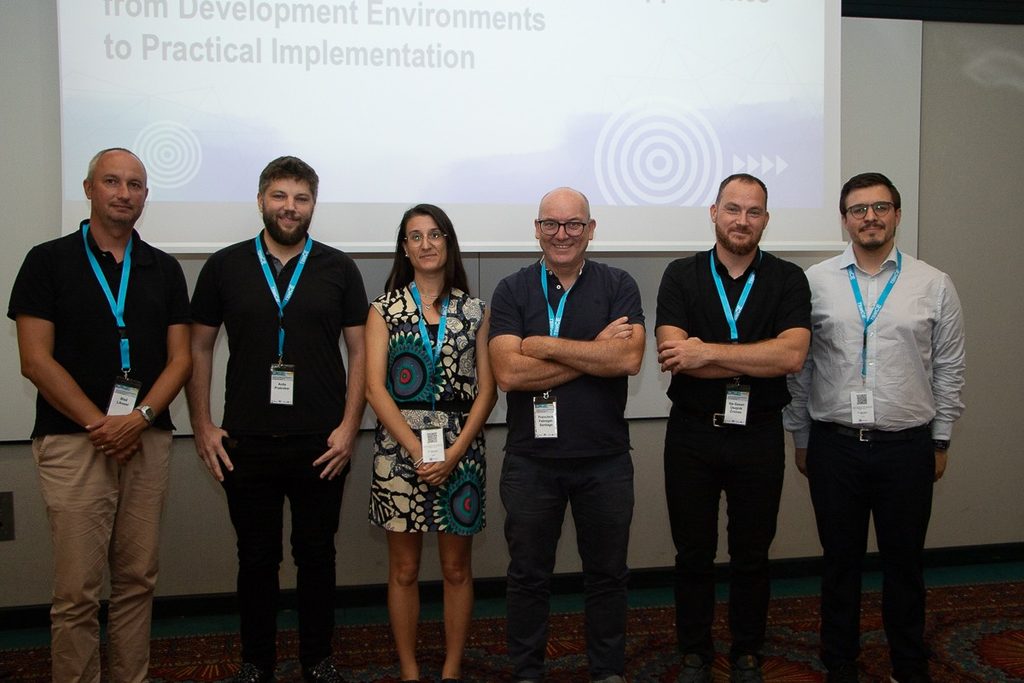
On 9 September 2026, PeCATHS participated in the 9th International Conference on Technologies & Business Models for Circular Economy (TBMCE 2026) in Portorož, Slovenia, alongside its sister projects ILIMITED, NOVETROL and CarbNETs, in a dedicated session exploring how emerging energy technologies can contribute to the climate transition.
Held from 9 to 11 September at the Grand Hotel Bernardin, TBMCE 2026 brought together researchers, industry representatives and innovation stakeholders working on technologies and business models for a more sustainable and circular economy.
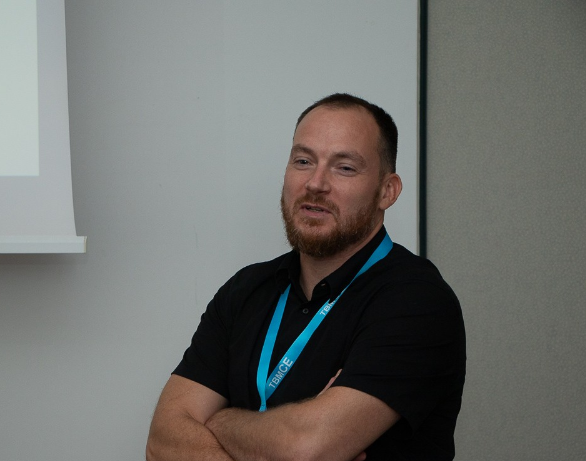
The joint session, “From Research to Application: Cross-Sector Energy Technologies for the Climate Transition”, took place on 9th September from 16:30 to 18:00 and was chaired by Blaž Likozar from the National Institute of Chemistry, Slovenia.
Bringing together PeCATHS, ILIMITED, NOVETROL and CarbNETs, the session provided an opportunity to present complementary technological approaches to the energy transition and, importantly, to strengthen collaboration and knowledge exchange between European research and innovation initiatives.
PeCATHS: a sustainable way to store hydrogen
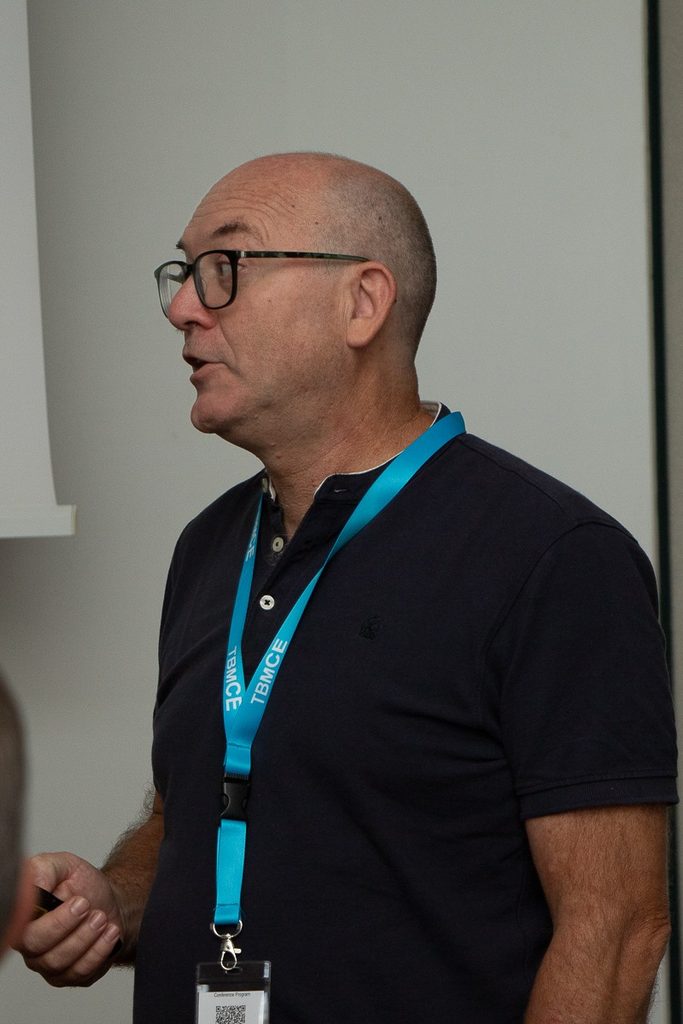
Francisco Fabregat-Santiago from Universitat Jaume I presented the PeCATHS contribution, entitled “PeCATHS: A Sustainable Way to Store Hydrogen.”
The presentation focused on the PeCATHS project’s core challenge: developing a new, sustainable approach to hydrogen storage.
Hydrogen plays an important role in the transition to a climate-neutral energy system, particularly for storing renewable energy. However, its widespread use requires storage solutions that address technical, economic, and sustainability challenges.
PeCATHS is working to advance photoelectrochemical and electrochemical approaches to hydrogen storage, bringing together expertise in advanced materials, photoelectrochemistry, electrochemistry, modelling and sustainability. The project explores innovative pathways to store renewable energy in the form of chemical energy, while considering the technology’s broader environmental and economic implications. The contribution presented at TBMCE 2026 involved researchers and partners from Universitat Jaume I, the University of Zurich, the Catalan Institute of Nanoscience and Nanotechnology (ICN2), CIC energiGUNE, Trinity College Dublin and Comet Global Innovation.
Different technologies, a common challenge
The joint session demonstrated the diversity of technologies needed to support the energy and climate transition.
Alongside PeCATHS, ILIMITED presented two complementary contributions related to CO₂ capture and its valorisation into methanol.
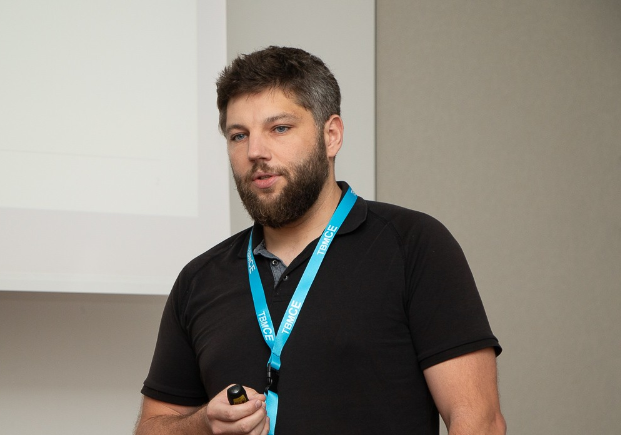
The first, presented by Anže Prašnikar from the National Institute of Chemistry, addressed the sorption performance and hydrothermal stability of ionic liquids for converting biogenic CO₂ into methanol at wastewater treatment plants. The research forms part of ILIMITED’s work on innovative ionic-liquid-based solutions designed to improve CO₂ capture and conversion. A second ILIMITED contribution, presented by Filipe H. B. Sosa from the University of Aveiro, focused on adsorbent design to intensify processes for valorising CO₂ into methanol. Together, the two contributions illustrated different aspects of the project’s efforts to develop more efficient processes for transforming captured carbon into a valuable chemical and energy carrier.
Integrating sustainability from the early stages of innovation
NOVETROL brought another important dimension to the session: assessing the sustainability of emerging technologies before they reach commercial maturity.
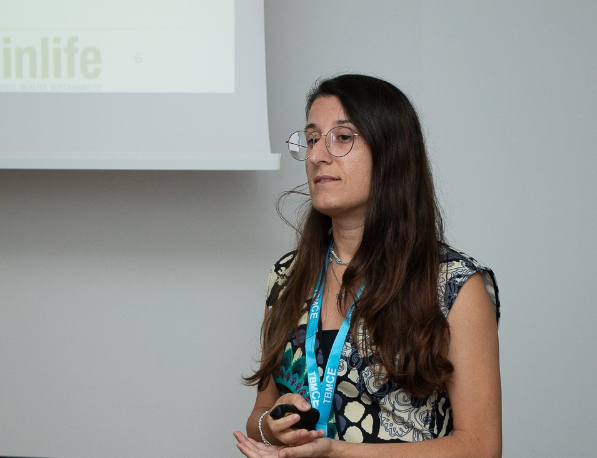
Martina Pucciarelli from Spin Life presented “Application of LCA and S-LCA to low-TRL Technologies: A Case Study of a Novel Current-limiting Solution for the Energy Transition.” The contribution explored applying Life Cycle Assessment (LCA) and Social Life Cycle Assessment (S-LCA) to technologies at a low Technology Readiness Level (TRL). Applying these methodologies during the early stages of technology development can help researchers identify potential environmental and social impacts, highlight possible trade-offs and identify opportunities for improvement before technologies are scaled up.
CarbNETs: combining technologies for industrial decarbonisation
CarbNETs completed the session with a contribution focused on CO₂ capture, thermal energy management, and electrification using net-zero industrial technologies for decarbonisation.
Presented by researchers from Slovenia’s Centre for Development, Demonstration and Training for Carbon-Free Technologies and the National Institute of Chemistry, the contribution illustrated the importance of combining different technological solutions to address industrial emissions and energy consumption. This integrated perspective complements the approaches presented by PeCATHS, ILIMITED, and NOVETROL: while PeCATHS addresses sustainable hydrogen storage, ILIMITED explores carbon capture and valorisation, and NOVETROL brings environmental and social life-cycle assessment into technology development, CarbNETs focuses on integrating technologies that support industrial decarbonisation.
Collaboration to accelerate the climate transition
Beyond the individual scientific contributions, the TBMCE 2026 session represented an important milestone for collaboration between PeCATHS, ILIMITED, CarbNET and NOVETROL as Horizon Europe sister projects, while also creating connections with CarbNETs and the wider European clean-energy research community.
The projects address different technological challenges but share a common objective: helping promising energy technologies progress from research towards real-world application.
Joint activities such as the TBMCE session make it possible to exchange knowledge across disciplines, identify synergies between technologies, share approaches to sustainability and exploitation, and explore opportunities for future scientific and communication activities.
This collaborative dimension is particularly important because the transition towards a climate-neutral energy system cannot rely on a single technology. Hydrogen storage, CO₂ capture and utilisation, sustainable fuels, electrification, energy management and life-cycle assessment are interconnected elements of a much broader transformation.
For PeCATHS, participation in TBMCE 2026 was therefore more than an opportunity to present its research on sustainable hydrogen storage. It was also an opportunity to strengthen cooperation with sister projects, connect with complementary research initiatives and place the project’s work within a broader European ecosystem of energy innovation.
By bringing together different technologies, expertise and perspectives, the session showed how collaborative European research can help bridge the gap between scientific innovation and practical solutions for a more sustainable, circular and climate-neutral future.
Learn more
For further details about the conference, the joint session and the research presented by PeCATHS and the other participating projects, consult the official TBMCE 2026 Conference Programme. The full abstracts and additional information about the scientific contributions are available in the TBMCE 2026 Book of Abstracts, published by the University of Maribor Press.
Written by The Universitat Jaume I (UJI)
 PECATHS project has received funding from the European Union’s Horizon Europe programme under Grant Agreement No. 101191948.