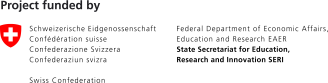
May 6th, 2026, UNI, the Italian Standardisation Body, presented UNITED CIRCLES at Bocconi University in Milan, during a lecture within the Master of Science in Economics and Management of Government and International Organisations.
The session introduced students to the role of European and international standardization in supporting innovation, research and market uptake within Horizon Europe projects. In particular, the lecture focused on how standards can help translate research outcomes and innovative concepts into shared references, practical tools and solutions that can be understood, replicated and adopted by different stakeholders.
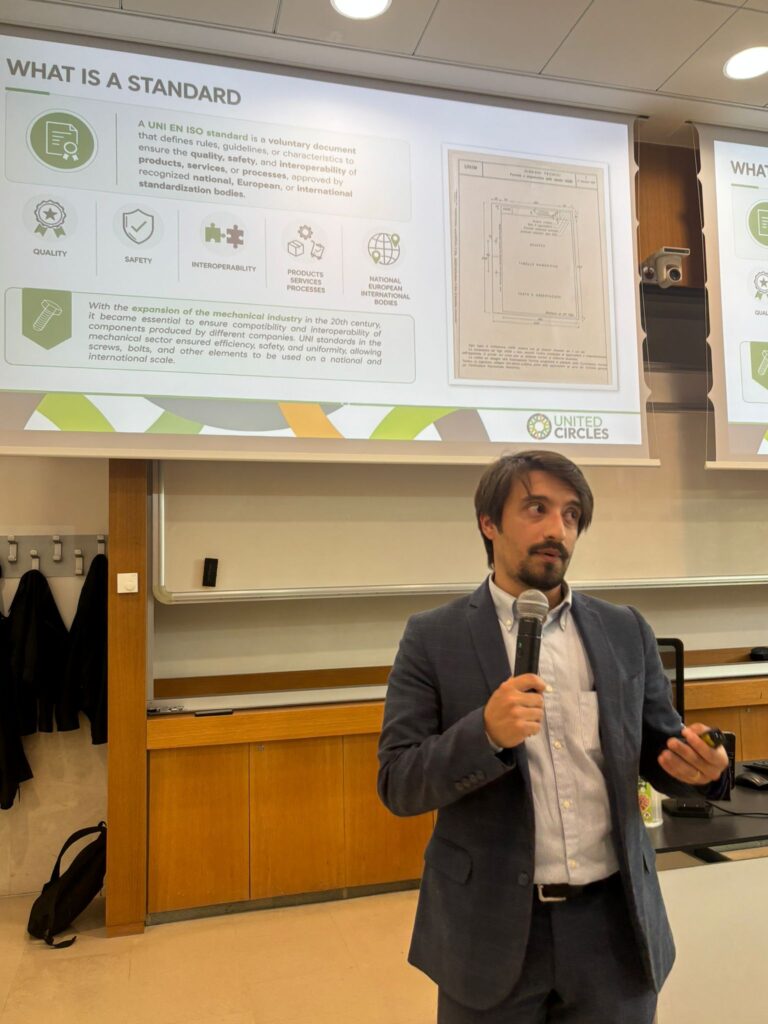
UNITED CIRCLES was presented as a concrete example of this process, showing how the project’s work on circular and sustainable industrial systems can benefit from the contribution of standardization. Its approach, with a specific focus on the concept of Hubs4Circularity, was used to explain how collaboration among industrial actors, research organisations, institutions and local ecosystems can support more circular, resource-efficient and regionally connected value chains.
Through the example of UNITED CIRCLES, the lecture further explored key concepts such as circular economy and urban industrial symbiosis, showing how they can move from broad policy and research objectives to more concrete and actionable practices. In this context, standards can play an important role by helping define common terminology, clarify methodological approaches, identify shared criteria and support the operationalization of circular solutions across different sectors and territories.
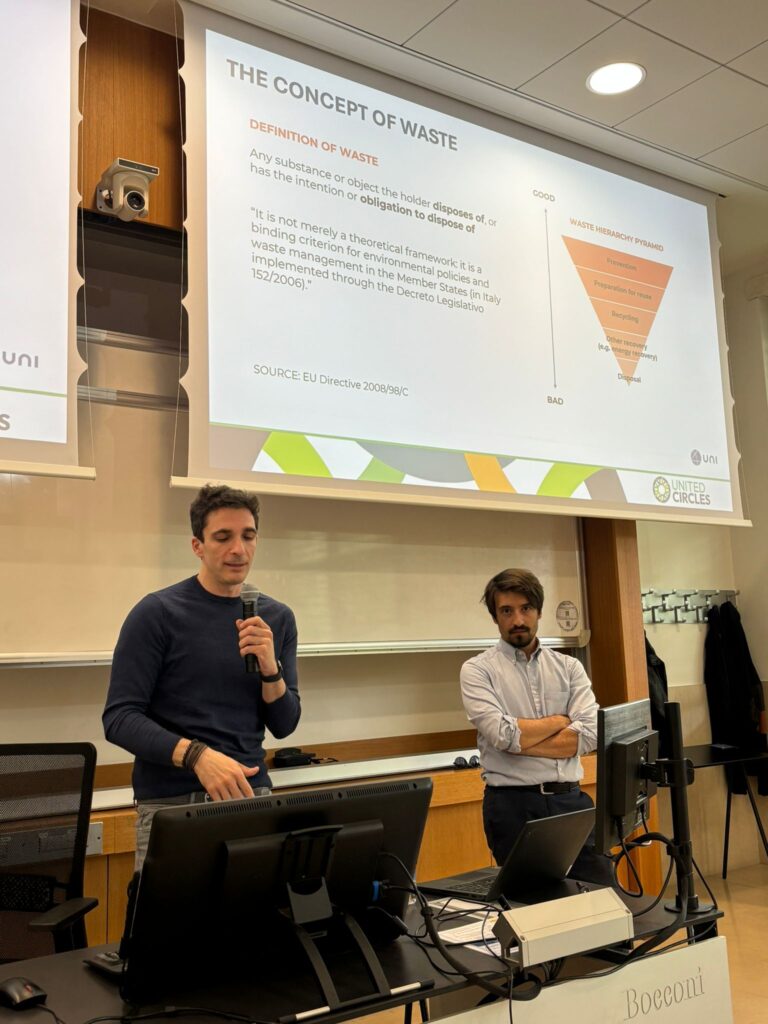
This perspective was particularly relevant for an academic audience. Standards can sometimes appear distant from students’ immediate interests, especially when described only through procedures, committees or acronyms. However, when linked to real innovation challenges, such as transforming waste streams into resources, connecting urban and industrial systems, or enabling the replication of project results, their role becomes much clearer.
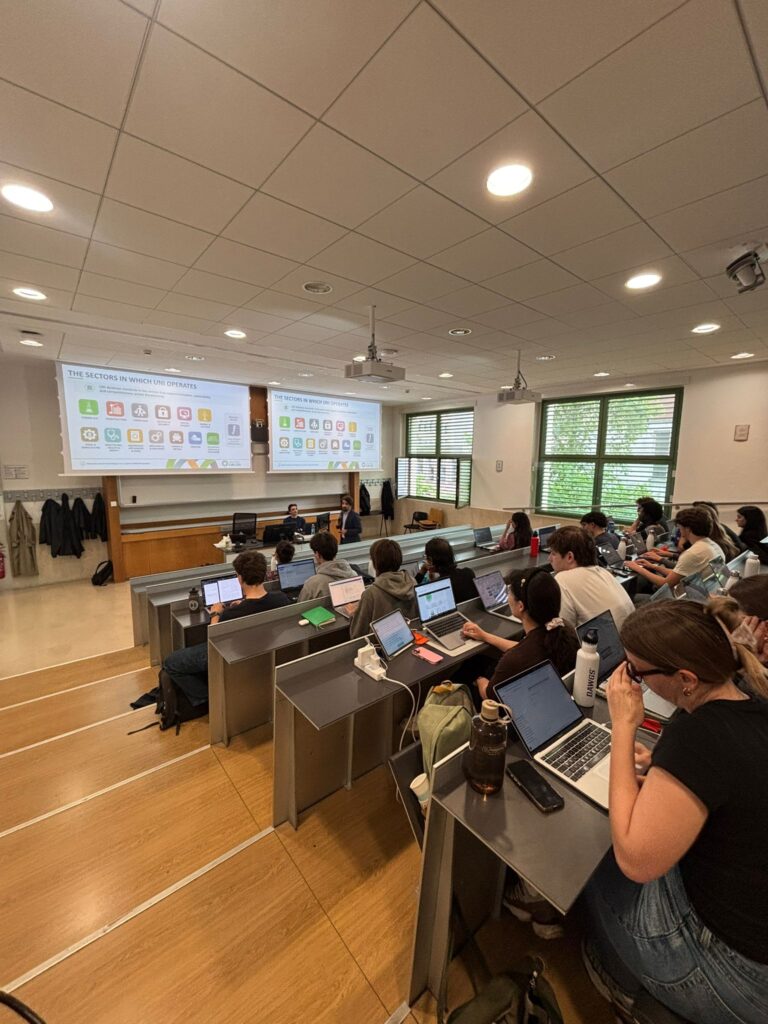
The lecture, therefore, represented an opportunity to present UNITED CIRCLES while also highlighting the broader role of European research, innovation and standardisation in addressing complex societal and industrial challenges. Horizon Europe projects can help connect knowledge, technologies, institutions, and market actors, supporting solutions that are not only innovative but also scalable, replicable, and ready to generate impact beyond the research context. In this process, standards play a key role by building the common language and trust needed to make new solutions understandable, reliable and usable by different stakeholders. The session also underlined the importance of engaging students, young professionals and future managers in the transition towards circular and sustainable industrial systems.
Written by UNI
 UNITED CIRCLES project has received funding from the European Union’s Horizon Europe programme under Grant Agreement No. 101178798.