
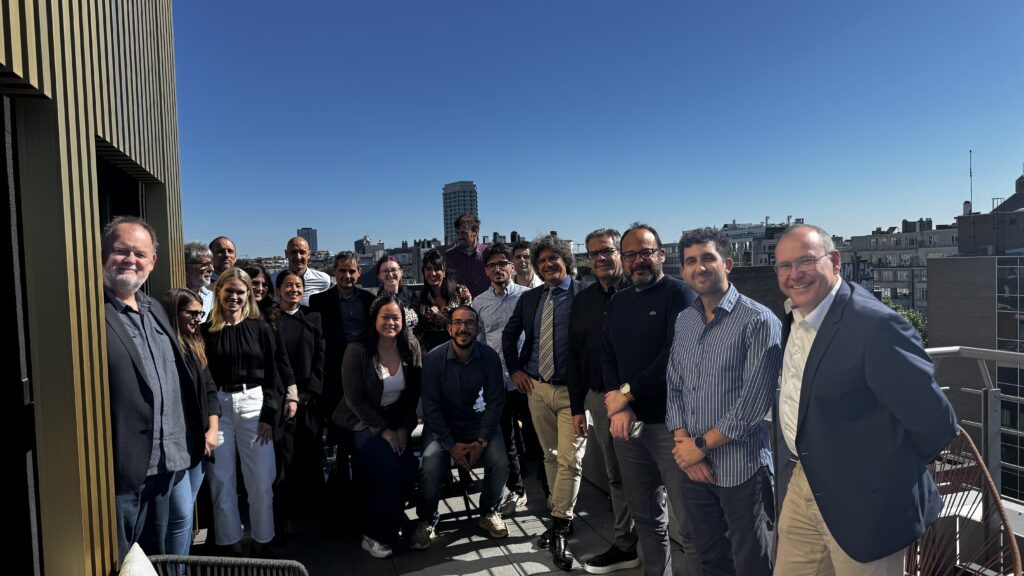
EU-funded SCENARIOS project officially concluded its groundbreaking work on April 30th, 2026, with a dynamic final event held at Comet Louise in the heart of Brussels on the 29th. The gathering brought together a hybrid audience of 50 experts, researchers, and policymakers to present comprehensive findings on addressing the global challenge of per- and polyfluoroalkyl substances (PFAS). With 30 attendees joining remotely and 20 present on-site, the event was a testament to the project’s collaborative spirit. The day-long agenda was structured around five intensive sessions, each dedicated to a specific pillar of the project’s “One Health” approach.
A Day of Intensive Knowledge Exchange
The event ran from 9:00 AM to 6:00 PM, featuring a rigorous schedule of 15-minute presentations followed by extended discussion periods. These discussions often stretched beyond their allotted time, reflecting the high level of engagement and the critical nature of the topics at hand.
Session 1: From Environmental Occurrence to Exposure Pathways
The morning kicked off with an overview by Francesco Dondero (UPO, WP1), who framed the project’s integrated strategy. The session rapidly moved into technical deep dives:
- Ofer Dahan (BGU) and Christos Tzakiroglou/Knut Erik Klint (FORTH/GEO) presented on tracking and predicting PFAS transport in the environment.
- Davide Gualandris (UPO) highlighted the transfer of these contaminants along the trophic chain.
- Chiara Leo (POLOGGB) delivered a striking presentation on PFAS as key drivers of antimicrobial resistance and biodiversity change.
Session 2: Human Exposure and Biological Effects
Focusing on the direct impact on human health, this session featured:
- Jacopo Megna (UOAL) sharing data on biomonitoring in PFAS hotspots.
- Thorsten Buhrke (BfR) discussing PPARα activation and the use of New Approach Methodologies (NAMs).
- Harris Serimveis (NTUA) unveiling machine learning models for predicting biological properties.
- Marcello Manfredi (UPO) presenting on ex vivo microbiome dysbiosis caused by short-chain PFAS.
Session 3: Solutions and Societal Impact
The pre-lunch session shifted toward actionable solutions and economic viability:
- TBC (ENVY) outlined PFAS removal strategies demonstrated in SAFF sites.
- Christos Aggelopoulos (FORTH) detailed PFAS destruction technologies.
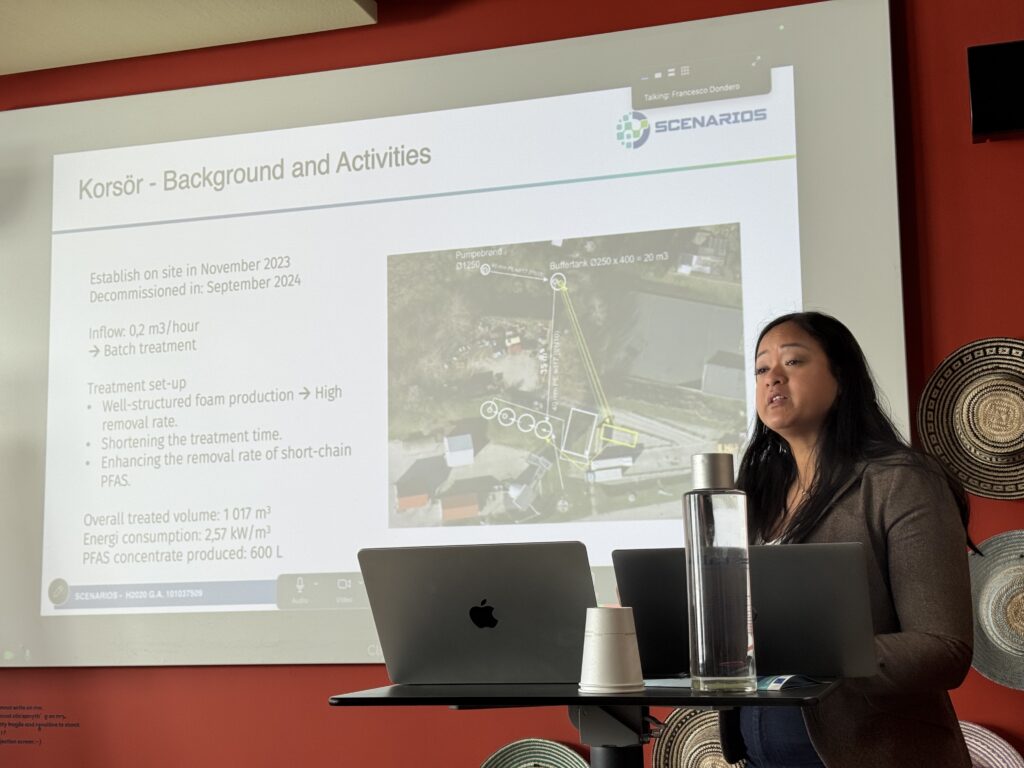
- Alberto Di Prizio (UNILE) and Jan Klenner (LOMARTOV) presented Life Cycle Assessments and the first Cost-Benefit Analysis of SCENARIOS technologies, providing a clear economic case for adoption.
Afternoon Sessions: Smart Detection and Policy
The afternoon resumed with a focus on innovation and future regulation:
- George Voyiatzis and Hadar Benyav (FORTH/BGU) showcased innovative detection methods.
- Antreas Afantitis (Novamechanics) demonstrated the project’s digital tools for data integration.
- The session culminated in a live interactive policy session, where attendees voted and discussed how to translate SCENARIOS results into concrete policy implications.
Session 5: Technical Wrap-up
The day concluded with a technical review, including Eva Junque’s (UoB) findings on PFAS prevalence in fish across two seas, a live demonstration of the SCENARIOS Decision Support System by Francesco Buccoliero (Unisalento), and preliminary data on immune system responses to 34 different PFAS compounds.
Looking Ahead
The SCENARIOS project has successfully delivered a suite of tools, technologies, and insights designed to tackle PFAS contamination from detection to remediation. As the project closes, the focus now shifts to the widespread adoption of these technologies and the integration of its findings into EU environmental policy.
The event at Comet Louise served not just as a conclusion, but as a launchpad for the next phase of environmental protection, proving that a coordinated, multi-disciplinary approach is essential for safeguarding both human health and the ecosystem.
 Scenarios project has received funding from the European Union’s H2020 programme under Grant Agreement No. 101037509.