
A Global Meeting Point for Hydrogen Innovation
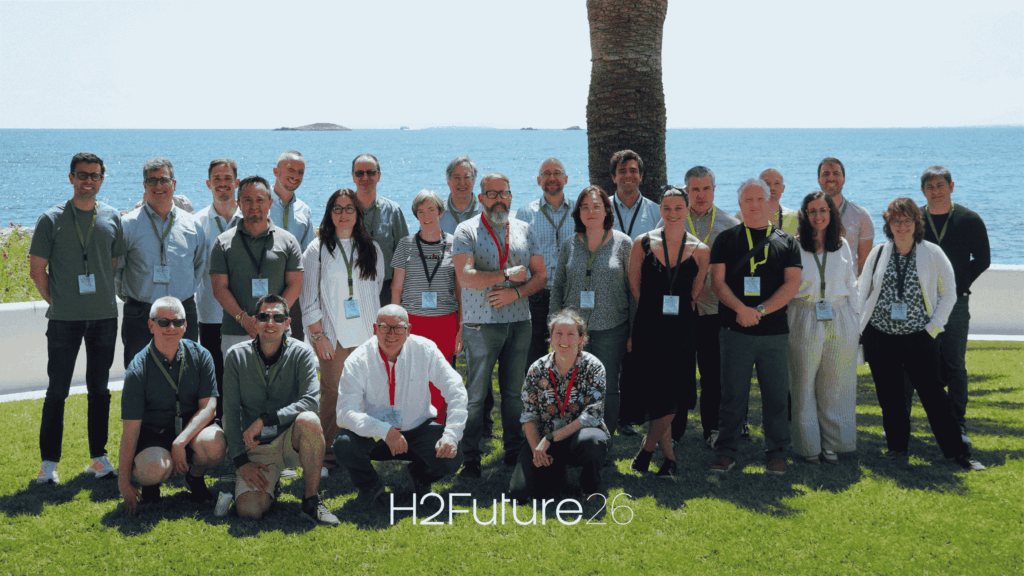
From April 27 to 30, 2026, the nanoGe conference, The Future of Hydrogen: Science, Applications and Energy Transition (H2Future26), successfully brought together international experts, researchers, policymakers, and industry leaders at THB Los Molinos in Ibiza, Spain. The event became a major meeting point for discussing the role of hydrogen in the global transition toward a more sustainable and decarbonised energy system.
Over four days, participants explored the latest advances across the entire hydrogen value chain, from production and storage technologies to transportation infrastructures, catalytic processes, industrial applications, and regulatory frameworks. The conference reinforced the growing importance of hydrogen as a strategic energy vector capable of supporting climate neutrality goals worldwide.
H2Future26 stood out for its transversal approach, creating opportunities for collaboration between academia, industry, and policymakers. The conference sessions highlighted both the scientific challenges and the technological opportunities required to accelerate the global implementation of hydrogen-based solutions.
PeCATHS Researchers Presented Innovative Hydrogen Technologies
Among the key scientific contributions at H2Future26 were the presentations delivered by researchers associated with the PeCATHS project. Their talks addressed critical challenges in hydrogen storage, solar-driven chemistry, and catalyst design for sustainable hydrogen production and utilisation.
José A. Mata Presented New Strategies for Efficient Hydrogen Storage
During Session 2.1 on April 28, José A. Mata presented his oral contribution entitled “Electrocatalytic Hydrogen Storage for Enhancing the Efficiency of Liquid Organic Hydrogen Carriers.”
The presentation focused on one of the major challenges facing green hydrogen technologies: the development of safe, efficient, and economically viable storage systems. Mata highlighted the potential of Liquid Organic Hydrogen Carriers (LOHCs) as a competitive alternative for hydrogen storage and transportation. LOHC systems allow hydrogen to be chemically stored in liquid carriers, offering advantages in safety and compatibility with existing infrastructure.
This innovative approach enables the direct transfer of hydrogen from biomass-derived molecules to LOHC compounds without generating intermediate hydrogen gas. At the same time, the process produces valuable chemical by-products, potentially improving both the efficiency and economic attractiveness of liquid hydrogen storage technologies.
The presentation also reviewed the current state of the art in LOHC systems and outlined future perspectives for advancing hydrogen storage solutions within sustainable energy networks.

David Tilley Highlighted Advances in Solar-Driven Chemical Transformations
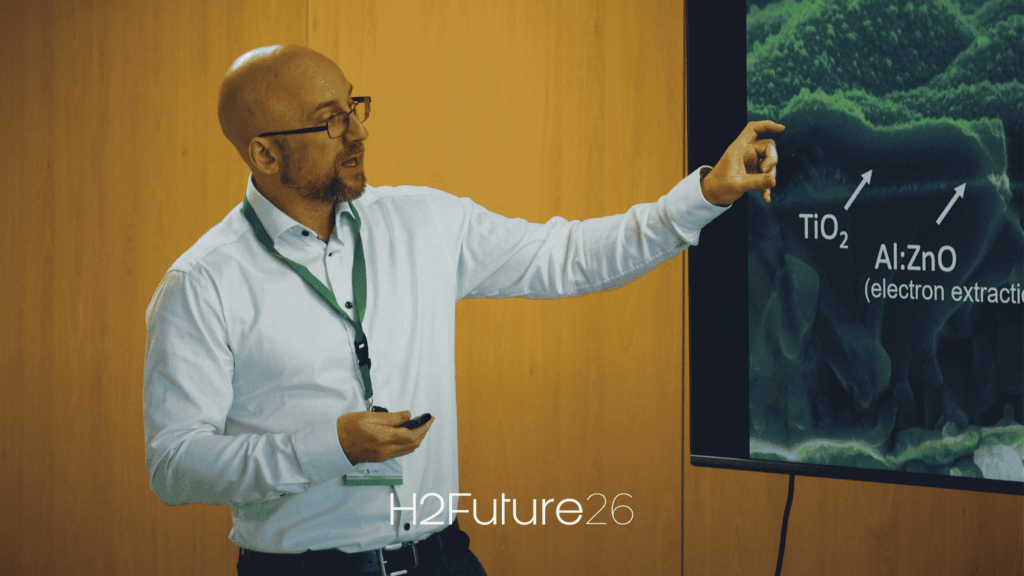
Also, on April 28, during Session 2.1, David Tilley delivered his presentation “Cuprous Oxide for Solar-Driven Chemistry.”
His talk showcased recent progress in the development of cuprous oxide (Cu₂O)-based photoelectrodes for solar-powered chemical reactions.
Tilley presented how these materials can be applied to hydrogen evolution reactions from water while also enabling the selective reduction and oxidation of organic molecules. These processes create opportunities for solar-powered chemical manufacturing that extend beyond conventional fuel production.
The presentation further demonstrated strategies for fabricating and modifying Cu₂O thin films to optimise catalytic performance and stability. Recent progress toward scalable particle-based photocatalytic systems was also discussed, highlighting the long-term potential of these technologies for industrial solar-driven chemistry applications.
Max García-Melchor Discussed Data-Driven Catalyst Design
On April 29, during Session 3.2, Max García-Melchor presented “Mechanistic and Data-Driven Design of Catalysts for Hydrogen Production and Utilisation.”
His presentation addressed the importance of catalyst development for building a future hydrogen-based economy. García-Melchor explained how mechanistic understanding, computational modelling, and descriptor-based screening can accelerate the discovery of efficient and cost-effective catalytic materials.
This research demonstrated how integrating theoretical simulations with operando electrochemical modelling can support the rational design of next-generation catalytic systems.

Strengthening Collaboration for the Energy Transition
H2Future26 confirmed the growing momentum behind hydrogen research and innovation worldwide. By bringing together specialists from multiple disciplines, the conference fostered valuable scientific exchange and strengthened international collaboration in support of the global energy transition.
The contributions presented by the PeCATHS partners highlighted the importance of combining advanced catalysis, sustainable hydrogen storage, and solar-driven chemistry to accelerate the development of scalable clean energy technologies for the future.
 PECATHS project has received funding from the European Union’s Horizon Europe programme under Grant Agreement No. 101191948.