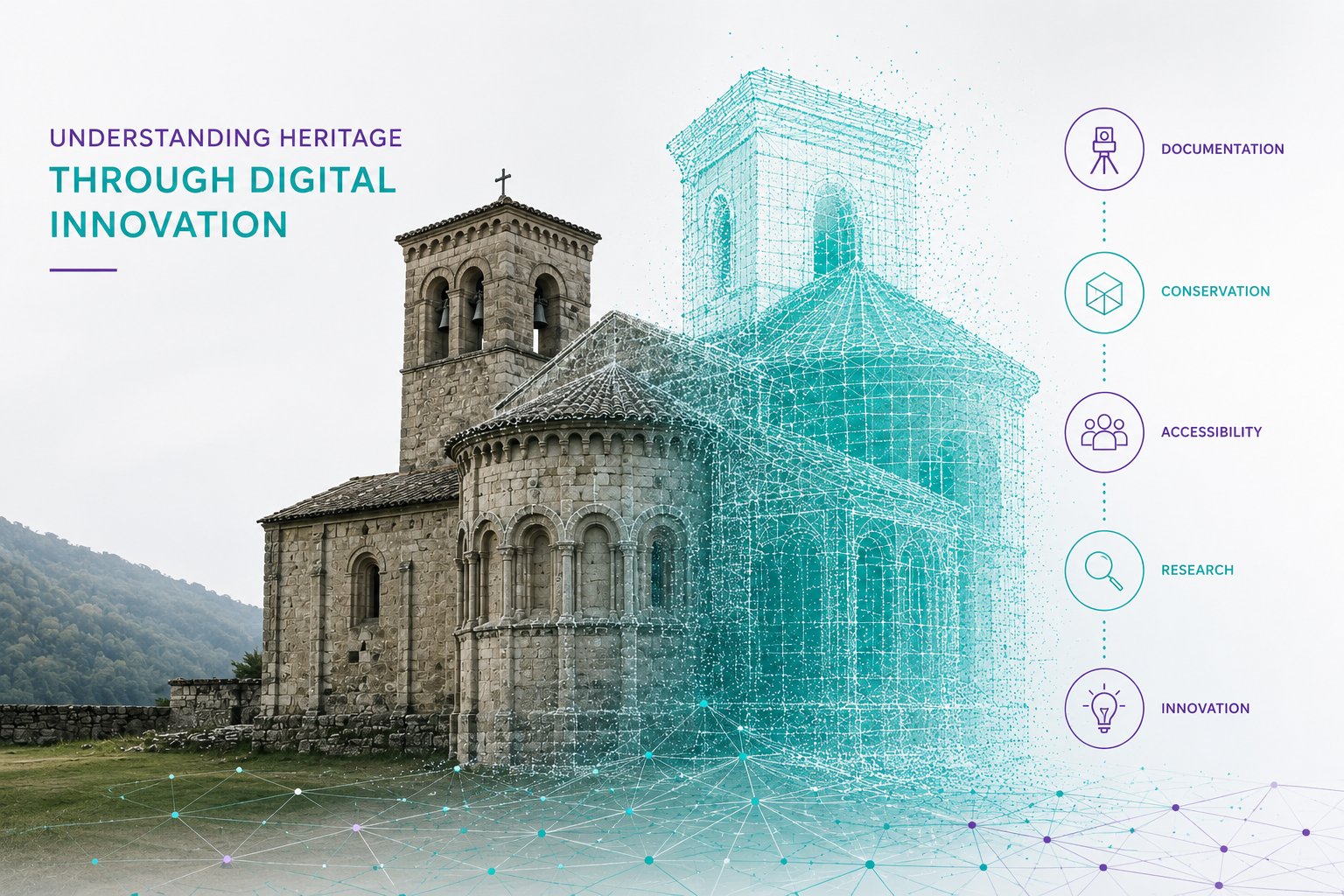
Cultural heritage is constantly exposed to challenges ranging from environmental conditions and natural disasters to urban development and the passage of time itself. Preserving monuments, historic buildings, collections, and cultural landscapes requires not only specialised knowledge but also new tools capable of documenting and understanding heritage in greater detail than ever before.
Digital technologies are playing an increasingly important role in this process. Advanced documentation methods can capture millions of data points in a matter of hours, creating highly accurate records that support conservation, research, and public engagement. However, collecting data is only the first step. The real challenge lies in transforming that information into practical knowledge that can help heritage professionals make informed decisions.
This is one of the reasons why Fundación Santa María la Real has joined HERITALISE, a European project dedicated to developing innovative approaches for the digitalisation and preservation of cultural heritage.
From documentation to informed conservation
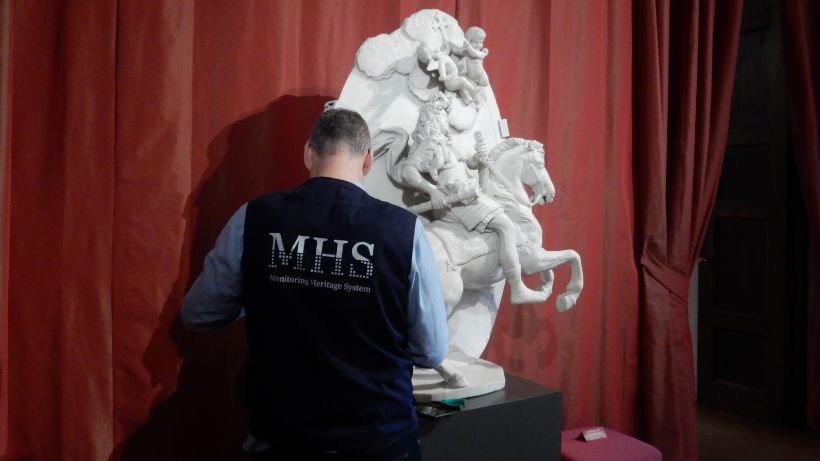
For decades, Fundación Santa María la Real has worked to improve the understanding and conservation of cultural heritage through research, documentation, and technological innovation. Initiatives such as the Encyclopaedia of Romanesque Art and the Monitoring Heritage System (MHS) have demonstrated how digital tools can support both the recording of heritage assets and their long-term preservation.
This experience provides a valuable foundation for the Foundation’s role within HERITALISE. By collaborating with universities, research centres, museums, and technology providers from across Europe, the Foundation contributes practical knowledge gained through years of working directly with heritage sites and cultural institutions.
The project offers an opportunity to connect this hands-on expertise with emerging technologies, ensuring that new digital solutions address real conservation needs rather than remain purely technical developments.
Building the future of heritage digitalisation
HERITALISE is exploring how technologies such as LiDAR scanning, photogrammetry, artificial intelligence, virtual and augmented reality, and Geo-HBIM systems can be combined into integrated workflows for heritage documentation and management.
The objective is not simply to create more digital records. Instead, the project seeks to improve the quality, accessibility, and usability of heritage data, enabling cultural institutions to better understand their assets, monitor their condition, and share knowledge with wider audiences.
This approach is particularly relevant at a time when heritage organisations are generating increasing amounts of digital information but often face challenges in managing, connecting, and reusing these datasets effectively.
A European collaboration for shared challenges
The technologies and workflows being developed within Heritalise are being tested at pilot sites in Scotland, Italy and Malta, ensuring their applicability across a range of contexts and heritage settings. For the Santa María la Real Foundation, participation in HERITALISE represents more than just involvement in a research project. It is an opportunity to contribute to a broader European effort aimed at making heritage conservation more effective, accessible and resilient through innovation.
Technology in the service of heritage
Digitalisation is often associated with technological progress, but its true value lies in what it enables. Better documentation can support better conservation. Improved access to information can encourage research and education. More accurate data can help heritage managers anticipate risks and plan interventions.
By contributing its expertise to HERITALISE, Fundación Santa María la Real continues to support a vision in which technology serves heritage and society, helping ensure that cultural assets can be understood, protected, and appreciated by future generations.
Written by Fundación Santa María la Real
 ECHOES is a project funded by the European Commission under Grant Agreement n.101158081. The views and opinions expressed in this website are the sole responsibility of the author and do not necessarily reflect the views of the European Commission.