
International scientific exchange, advanced catalyst design and new opportunities for collaboration marked an inspiring week of electrochemistry research in Sydney, Australia.
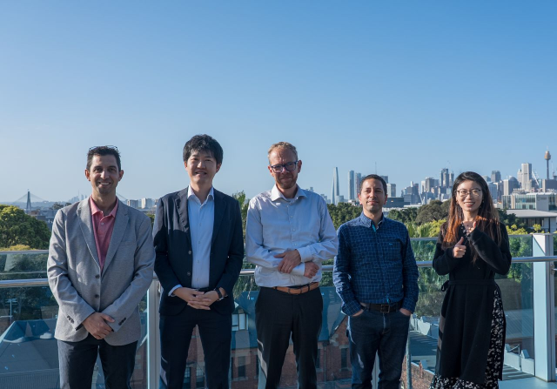
Following the 77th Annual Meeting of the International Society of Electrochemistry (ISE), the University of Sydney hosted the EU–Sydney Workshop on Electrocatalysis, bringing together scientists from European, Japanese and Australian institutions to discuss emerging challenges and advances in the field.
Among the invited speakers was Max García-Melchor, Ikerbasque Research Professor at CIC energiGUNE, who shared recent work relevant to PeCATHS on developing sustainable electrocatalytic materials. The meeting offered an opportunity to exchange ideas and explore complementary approaches to catalyst discovery.
Mechanistic and Data-Driven Design of Sustainable Catalysts
Max García-Melchor delivered a lecture entitled “Mechanistic and Data-Driven Design of Earth-Abundant Catalysts for Electrochemical Hydrogenation”. His presentation focused on combining mechanistic understanding with data-driven methodologies to guide the design of catalysts for electrochemical hydrogenation.
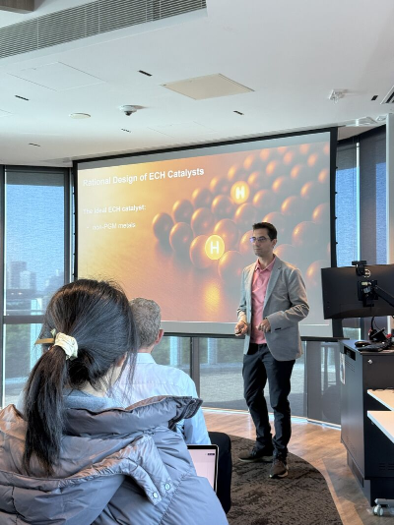
Electrochemical hydrogenation is a promising route towards more sustainable chemical transformations, using electricity to drive reactions under potentially milder conditions. Nevertheless, developing catalysts that combine high activity, selectivity, stability and affordability remains a major challenge.
Catalysts made from earth-abundant elements offer an attractive alternative to systems relying on scarce or costly materials. Integrating insights into reaction mechanisms with experimental and computational data can help identify promising materials and improve their performance. These directions are closely aligned with PeCATHS research interests in more efficient and sustainable electrochemical technologies.
An International Forum for Electrocatalysis
The workshop brought together an outstanding group of researchers, including Jan Rossmeisl (University of Copenhagen), Federico Calle-Vallejo (UPV/EHU), Axel Groß (Ulm University) and Yu Katayama (The University of Osaka).
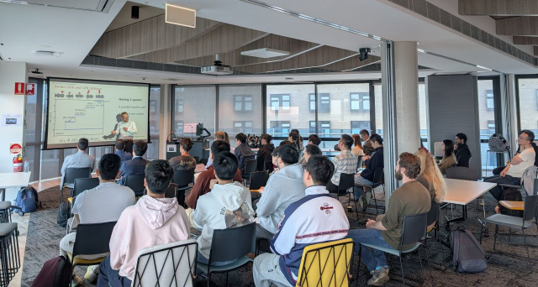
Topics ranged from high-entropy materials and data-driven catalyst design to first-principles modelling and operando spectroscopy. The discussions illustrated how experimental characterisation, theoretical modelling and data analysis can work together to address fundamental questions in modern electrocatalysis.
Beyond the individual presentations, the workshop provided a valuable forum for exchanging perspectives on catalyst activity, selectivity and the development of new materials for electrochemical applications.
Strengthening International Scientific Connections
The visit also offered an opportunity to learn more about the electrocatalysis research taking place at the University of Sydney and to engage with local researchers and their teams. Special thanks go to Aoni Xu and Fengwang Li for their invitation, warm welcome and hospitality throughout the visit.
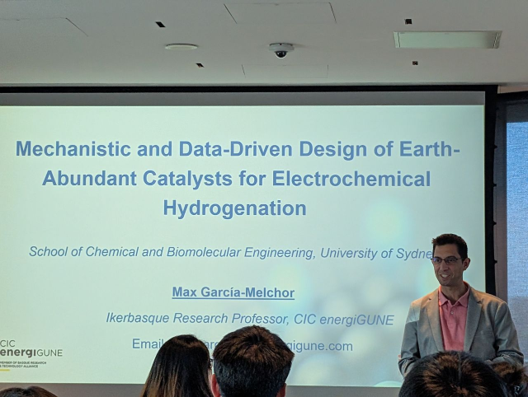
For PeCATHS, participation in international scientific events helps disseminate research, strengthen connections across institutions and explore future collaborations. The EU–Sydney Workshop on Electrocatalysis was an inspiring conclusion to a week of scientific exchange in Australia, following the 77th ISE Annual Meeting.
PeCATHS looks forward to continuing these discussions and fostering international cooperation to advance sustainable electrocatalysis.
 PECATHS project has received funding from the European Union’s Horizon Europe programme under Grant Agreement No. 101191948.
